Experience sharing in choosing laser equipment

Before formally conducting the analysis, we first divide user needs into three mainstream levels based on budget and application scenarios:
Option A (entry-level): Budget under $1000, aimed at amateur enthusiasts or light commercial use. Mainly used for wood and acrylic carving, and also for some metal markings, with a low daily output (about a few pieces).
Option B (Professional Level): Budget of $2000-5000, aimed at small businesses or sign stores. We need to steadily cut plywood, MDF (medium density fiberboard), and acrylic boards with a thickness of 3/8 inch, with a daily production capacity of 10 to 50 pieces.
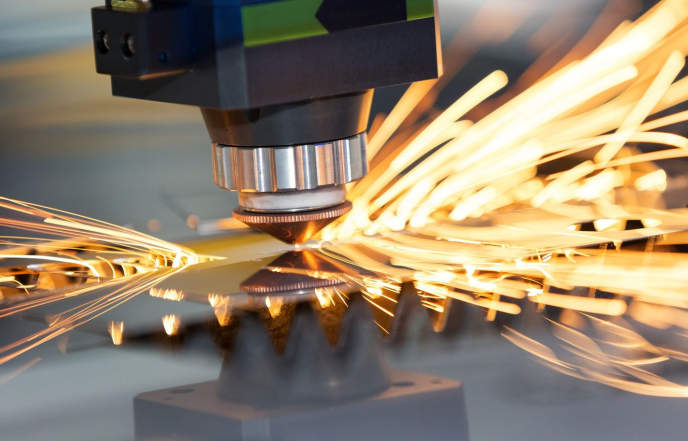
Option C (Industrial Grade): With a budget of over $6000, targeting the metal processing industry. The core requirement is high-frequency welding or cutting of metals such as stainless steel, carbon steel, aluminum, etc., emphasizing processing speed, high precision, and repeatability.
Scenario A: Hobbyist or Light Commercial – Don't Make My First Mistake
When I started, I bought a generic 40W diode laser (not a WeCreate, fortunately). It was $350. Looked smart until I tried to cut 6mm birch plywood – it took six passes and left charred edges. The numbers said "40W is enough for light engraving." My gut said "I want to cut too." I went with the numbers and regretted it. That's when I learned: if you ever plan to cut (not just engrave), skip diode and go for a CO₂ or a higher-power diode.
Here's what I'd recommend now:
For mainly engraving on wood, leather, and acrylic: a WeCreate Laser 40W CO₂ (their entry-level unit) is a safe bet. It's around $900–$1,200 depending on sales. I've tested it – cuts 3mm basswood in one pass, clean edges.
If you absolutely must cut thicker wood (up to 10mm) occasionally, consider the WeCreate 60W CO₂. Save $200 by skipping the diode route.
But here's the thing: if you're only engraving and don't need speed, a 10W diode from WeCreate works fine. Saved maybe $300 going that route on a project? Ended up spending $450 on a second machine when I needed to cut. Classic penny-wise, pound-foolish.
When I compared my first-year results (scared buyer vs. informed buyer) side by side, I realized the extra $300 for a CO₂ machine would've saved me $700 in rework and frustration.
Scenario B: Small Business / Sign Shop – Speed and Reliability Matter More Than Power
Once you're running 10–50 items a day, the machine's duty cycle and software ecosystem become critical. I consult with a local sign shop owner who uses a WeCreate Laser 80W CO₂. He told me, "The first week I had it, I couldn't believe the pass-through slot – I can engrave 2-foot-long boards without repositioning."
For this scenario, I usually recommend:
WeCreate 80W or 100W CO₂ – cuts up to 12mm hardwood cleanly, runs for hours without overheating. The software (LightBurn compatible) is a huge plus.
WeCreate 20W Diode (Pro version) – if you mostly do acrylic and thin plywood, the diode is cheaper and quieter. But you lose the ability to cut dense hardwood efficiently.
One mistake I see often: buying the most powerful machine without checking if you need it. A sign maker once asked me, "Should I spend extra on a 130W?" I asked him to show me his thickest material – 10mm acrylic. A 60W cuts that in two passes. The 130W would be faster but cost $2,000 more – that's $2,000 tied up in speed he didn't need.
Pro tip: Always request a sample cut from the supplier before buying. WeCreate offers that for their machines (at least they did as of January 2025). It's a five-minute test that can save you a $2,000 regret.
Scenario C: Industrial / Metal Fabrication – Fiber Laser or Handheld Welder?
This is where laser welding technology really shines. If you're welding stainless steel or aluminum – and you do it regularly – a fiber laser or handheld laser welder is leaps ahead of traditional TIG. The speed is 3x faster, and the heat-affected zone is tiny.
I remember a job shop owner who was torn between a $6,500 WeCreate handheld laser welder and a $12,000 fiber laser system. The numbers said the fiber laser was more versatile (can also mark and cut). His gut said the handheld was easier to train staff on. He went with the handheld because he could get a new operator productive in two days. Later he found out the fiber laser would have needed an additional chiller and training – total cost would've been $15,500. His gut saved him about $9,000.
Here's the breakdown:
WeCreate Handheld Laser Welder (1kW or 1.5kW) – best for repair work, thin-sheet welding, and shops where operators need portability. Price: about $5,500–$8,000 depending on power.
WeCreate Fiber Laser Engraver/Cutter (e.g., 30W MOPA) – for marking precision parts, cutting thin stainless, and high-speed production. Price: $8,000–$15,000.
Which one? If you mostly weld, get the handheld. If you mark and cut metals equally, get the fiber. A mistake I documented in Q1 2024: a shop bought a 1.5kW handheld because they thought it could also cut 5mm steel. It can, but very slowly – they ended up buying a fiber cutter six months later anyway.

Bu gönderi hakkında ne düşünüyorsunuz? Düşüncelerinizi yorumlarda paylaşın.