Basic core skills for operating laser cutting machines

Effective operation of laser cutting machines requires comprehensive mastery of three core competencies: machine operation basics, material science knowledge, and computer-aided design (CAD) skills. These three are interrelated and indispensable. Lack of material knowledge may lead to unreasonable processing parameter settings; Lack of CAD capability will limit the design and optimization of cutting files; However, the lack of understanding of equipment operation makes it difficult to achieve efficient and precise machining even with design capabilities. Therefore, true professional competence should be based on the collaborative mastery of three skills and achieve a level of proficiency that matches the job requirements.
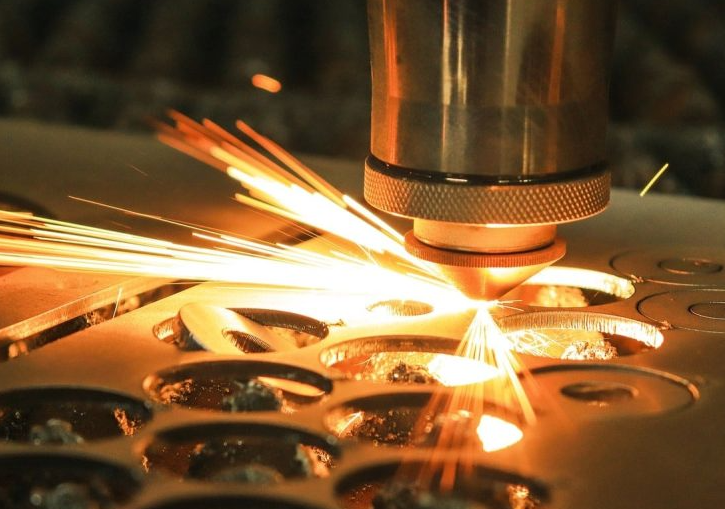
Basic Understanding of Machine Operation
Components of a Laser Cutting Machine
A working knowledge of the major subsystems of a laser cutting machine — their function, their interaction, and the observable indicators of their health — is the starting point for competent operation. The laser generator is the energy source: in a fiber laser cutting system, it consists of pump diodes, gain fiber, and resonator optics housed in a sealed cabinet, connected to the cutting head by a flexible fiber optic cable. The cutting head assembly contains the collimating optic, focusing lens, nozzle, and capacitive height-sensing system. The CNC motion system — typically a flying-optics gantry in flat-bed machines, or a combination of moving table and fixed head — drives the cutting head along programmed paths at speeds up to 100 m/min or higher on modern high-power machines. The chiller unit maintains the laser generator and optics at a stable operating temperature, directly affecting output power stability and beam quality. The assist gas delivery system supplies the pressurized cutting gas — oxygen, nitrogen, or compressed air — at precisely controlled pressure and flow rate to the cutting nozzle. The CNC controller ties all these subsystems together, executing the cutting program and managing the coordinated response of power, speed, and gas flow at every point along the cutting path.
Safety Features and Protocols
Safety features are not optional accessories on laser cutting machines — they are mandatory systems whose proper understanding and use is a fundamental operator competency. Industrial laser generators used in cutting systems are classified as Class 4 laser devices, meaning that their direct or specularly reflected beams are capable of causing immediate, severe, and potentially permanent eye and skin injury, and that diffuse reflections at close range may also be hazardous. In practice, the laser cutting machine’s enclosure — which encloses the cutting area and blocks all laser radiation — provides the primary safeguard, and most industrial systems cannot operate with the enclosure open. However, operators must understand the basis for this protection and must never attempt to defeat or bypass interlocks.
Beyond laser radiation, operators must be aware of the electrical hazards associated with high-voltage power supplies, the chemical hazards of fumes and particulates generated when cutting plastics, coated metals, and organic materials, the fire risks associated with cutting flammable materials at high power, and the mechanical hazards of the high-speed gantry motion system. Safety protocols — covering startup and shutdown sequences, response to emergency stop activation, fume extraction verification, and the procedures for safely entering the enclosure for maintenance — must be learned and followed consistently, not treated as formalities.
Material Knowledge
Understanding Material Properties
The response of a material to laser cutting is determined by a complex interplay of its optical, thermal, and mechanical properties. Optical absorptivity at the laser wavelength governs how efficiently the material couples the incident laser energy into heat — a property that varies not only between different materials but also with surface condition, temperature, and, importantly, wavelength. A polished copper surface reflects more than 95% of incident 1,064 nm radiation at room temperature, making keyhole initiation extremely difficult; once the keyhole is established and the surface is locally melted, absorptivity rises sharply. Thermal conductivity determines how rapidly heat diffuses away from the cutting zone — high thermal conductivity (copper, aluminum) requires higher laser power to maintain the kerf temperature, while low thermal conductivity (stainless steel, titanium) allows heat to accumulate, increasing the risk of heat-affected zone widening and dross formation.
Melting and vaporization temperatures, material thickness, and the presence of surface coatings, oxides, or lubricants all directly affect the optimal parameter settings for a given cut. An operator with genuine materials knowledge can reason from these properties to make an informed first estimate of appropriate parameters for a material they have not previously cut, rather than simply guessing or waiting for someone else to look up a table entry.
Selecting Appropriate Settings for Different Materials
Translating materials knowledge into appropriate machine settings is the practical skill that separates experienced operators from novices. For mild steel cut with oxygen assist gas, the exothermic oxidation reaction contributes significantly to cutting energy, enabling high cutting speeds at relatively modest laser generator power — but the oxygen pressure must be carefully optimized, as too high a pressure can cause turbulent, irregular cut edges, while too low a pressure allows dross to accumulate. For stainless steel cut with high-pressure nitrogen, the goal is to achieve a completely dross-free, oxidation-free edge suitable for direct use without post-processing; this requires higher laser generator power, nitrogen pressures of 10–25 bar, and carefully optimized cutting speeds to avoid both incomplete melt ejection at low speeds and excessive kerf widening at high speeds. For aluminum, the high reflectivity and thermal conductivity require special attention: modern high-brightness fiber laser generators handle aluminum far better than their predecessors, but the risk of back-reflection damage to the laser generator remains a consideration for less robust systems, and the high thermal conductivity demands higher power and faster speeds than comparably thick steel.
Understanding how to adjust focus position (negative defocus is often used for thick materials to balance penetration and melt ejection), nozzle standoff distance, assist gas type and pressure, and cutting speed for each material family — and how these parameters interact — is a skill developed through structured training and accumulated practical experience.
Computer-Aided Design (CAD) Skills
The Importance of CAD Software in Laser Cutting
The laser cutting machine executes cuts defined by digital geometry files, and the quality of those files directly determines the quality of the parts that come off the machine. A design with overlapping lines, open contours, or excessively sharp inside corners that exceed the machine’s minimum radius capability will either fail to cut correctly or produce parts with dimensional errors and quality defects. An operator who understands CAD — who can open a customer-supplied file, identify and correct these issues, optimize the geometry for efficient cutting, and generate a correctly formatted output for the machine controller — adds enormous practical value beyond the ability to merely load and run an existing program.
CAD software used in laser cutting environments ranges from general-purpose 2D drafting packages (AutoCAD, LibreCAD) to dedicated nesting and CAM software (Lantek, Sigmanest, SigmaNEST, Radix) that automate the layout of parts on a sheet to maximize material utilization, generate optimized cutting paths, and produce machine-ready CNC programs. Proficiency with at least one software platform in each category is increasingly expected of laser cutting operators in production environments, and the ability to use nesting software effectively — understanding how part orientation, common-line cutting, and micro-joint strategies affect both material utilization and cut quality — can have a measurable impact on material cost and throughput.
Basic CAD Operations: Designing, Editing, and Exporting Files
The CAD operations most relevant to laser cutting operators are not the complex solid modeling capabilities used by design engineers, but rather the practical 2D tasks that arise daily on the production floor: importing customer-supplied files in formats such as DXF, DWG, or SVG; cleaning and repairing geometry — closing open contours, removing duplicate lines, smoothing sharp vertices; scaling and orienting parts correctly; adding or modifying cut paths for tabs, bridges, or lead-in and lead-out segments; and exporting finished cutting programs in the format required by the machine controller. Understanding the significance of layer structure in CAD files — for example, using different layers to represent cut, score, and mark operations — and how the CAM software interprets these layers to assign different parameter sets is a practical skill with direct impact on production efficiency and part quality.
Effective laser cutting operation requires three interdependent core skill sets: machine operation knowledge — spanning subsystem understanding and rigorous safety protocol adherence; materials science knowledge — enabling informed parameter selection for the range of materials encountered; and CAD proficiency — allowing operators to prepare, verify, and optimize cutting files independently. Developing all three in parallel, rather than in isolation, produces operators who can respond effectively to the full range of situations encountered in a production environment.

Bu gönderi hakkında ne düşünüyorsunuz? Düşüncelerinizi yorumlarda paylaşın.