Scenario for selecting CO2 laser cutting machine and fiber laser

When is the best choice for CO2 laser cutting machine
In the field of non-metallic material processing, carbon dioxide laser cutting machine is recognized as the preferred technical solution due to its excellent process performance. Especially in the core market of signage and display production, this technology undertakes the cutting and carving tasks of materials such as acrylic, wood, foam PVC, and aluminum-plastic composite panels, perfectly balancing high-precision design resolution with high-quality edge quality required for signage products. What is particularly prominent is the flame polished edge formed when cutting acrylic, which has a unique smooth and transparent texture. This is a unique quality that is difficult to reproduce by other processing methods, and it is also an important support for high-end identification and display product value.
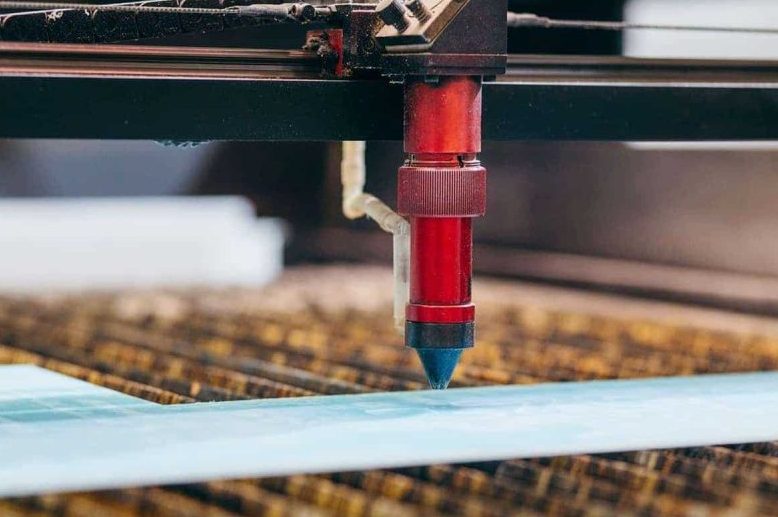
Furniture and interior design manufacturing uses CO2 laser cutting to produce intricate decorative panels, screens, and components in wood, MDF, and acrylic — geometries and tolerances that would be impossible to achieve economically with conventional woodworking tools. Fashion and leather goods manufacturers rely on CO2 laser cutting for precise, sealed-edge cutting of leather, synthetic leather, and technical textiles, enabling design complexity and production efficiency that die cutting cannot match for small and medium production runs. The packaging industry uses CO2 laser cutting for prototype and short-run production of custom boxes, bags, and inserts in paper, card, and foam. Hobbyists and small-business makers use CO2 laser cutters and engravers — available in desktop formats from under $1,000 — for personalized products, prototyping, and creative production in wood, acrylic, leather, and other accessible materials.
In industrial manufacturing, CO2 laser cutting machines remain relevant for processing non-metallic industrial materials — gaskets, seals, insulation, composite panels, and technical textiles — where the 10.6 µm wavelength’s absorption characteristics deliver cutting quality that fiber laser generators cannot replicate.
When Fiber Laser Is the Better Choice
A fiber laser generator is the better choice when the primary or exclusive cutting requirement is metal — particularly carbon steel, stainless steel, aluminum, copper, or brass at thicknesses above approximately 1 mm and at production volumes where cutting speed and energy efficiency materially affect unit economics. Sheet metal fabricators, metal component manufacturers, automotive suppliers, and structural carbon steel processors who have adopted fiber laser cutting have consistently reported productivity gains of 2 to 5 times compared with CO2 laser cutting on their metal cutting workloads, along with meaningful reductions in energy costs and maintenance demands.
Fiber laser generators are also the better choice when cutting highly reflective metals — copper, brass, and polished aluminum — where CO2 laser generators struggle to initiate and maintain stable keyhole formation, and when the production environment demands maximum uptime and minimum maintenance intervention. For any facility whose material mix is predominantly or exclusively metallic, the fiber laser generator’s advantages in speed, efficiency, and maintenance simplicity make it the clearly preferable technology, and the CO2 generator’s material versatility advantage is irrelevant if the non-metallic materials it handles are not part of the production requirement.
It is also worth noting that for facilities currently operating CO2 laser generators for metal cutting who are evaluating an upgrade, the transition to fiber laser technology typically delivers an immediate and measurable productivity benefit. The combination of faster cutting speeds, reduced energy bills, lower maintenance demands, and improved performance on materials such as aluminum and stainless steel above 3 mm consistently justifies the capital investment in fiber laser replacement or supplementation of CO2 cutting capacity. Many facilities adopt a transitional strategy — retaining existing CO2 capacity for non-metallic applications while introducing fiber laser capacity for metallic applications — before progressively consolidating as their CO2 equipment approaches the end of life.
Choose a CO2 laser cutting machine when the application is dominated by non-metallic materials — acrylic, wood, leather, textiles, foam, rubber, and similar organic or polymeric substrates — or when a mixed-material capability from a single platform is genuinely required. Choose a fiber laser generator when the primary requirement is high-speed, high-efficiency metal cutting, particularly on carbon steel, stainless steel, aluminum, copper, or brass at production volumes where speed, energy cost, and uptime are key commercial drivers.

Que pensez-vous de cette publication? Partagez votre avis dans les commentaires.