How to operate laser dust removal equipment safely?

To establish a safe laser dust removal operation, a systematic approach is needed to integrate engineering control, management control, and personal protective equipment into a hierarchical framework called hazard control hierarchy. In this framework, engineering control - measures to eliminate or reduce hazards from the source - always comes first. Management control, including relevant policies and operating procedures, followed by. Personal protective equipment serves as the last line of defense, providing additional protection when other control measures are insufficient.
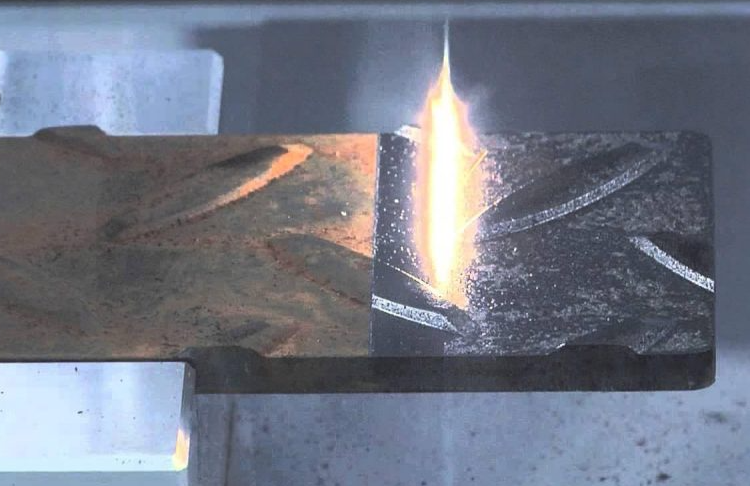
The first and most important engineering control is enclosure. Fully enclosed laser cleaning systems, in which the laser process takes place inside a protective housing with interlocked access panels, eliminate the risk of direct beam exposure for operators working outside the enclosure during normal operation. When fully enclosed systems are not practical — for example, in large-scale or in-situ cleaning applications where the workpiece cannot be moved into an enclosure — partial enclosures, laser curtains, and beam stops must be used to limit the extent of the laser-controlled area.
Local exhaust ventilation is the second critical engineering control, addressing the particle and fume hazards generated by the ablation process. As described in the earlier section on particle hazards, an effective LEV system must be properly designed, positioned, and maintained to provide reliable capture of the laser plume. Filter elements — particularly HEPA filters — must be inspected and replaced on a schedule that ensures their efficiency does not degrade below rated performance. Filter replacement itself is a potentially hazardous task if the captured material is toxic, and appropriate PPE and disposal procedures must be in place.
From an administrative standpoint, the appointment of a qualified Laser Safety Officer (LSO) is a requirement under both ANSI Z136.1 and the laser safety regulations of many countries. The LSO is responsible for overseeing all aspects of the facility’s laser safety program, including hazard evaluation, control implementation, personnel training, medical surveillance, and incident investigation. The LSO must be knowledgeable about laser physics, the biological effects of laser radiation, applicable regulations, and practical safety measures.
All personnel who work with or near laser cleaning systems must receive training appropriate to their role before they are permitted to enter the laser-controlled area. Operator training should cover the operating principles of the specific laser system, the nature and location of all hazards, the function and use of all safety controls and emergency stop mechanisms, the correct use and care of all required PPE, and the procedures to follow in the event of an incident or emergency. Training records should be maintained, and training should be refreshed on a regular schedule — typically annually — or whenever there is a significant change in the laser system, the materials being processed, or the operating procedures.
Medical surveillance — periodic health monitoring of workers who may be exposed to specific occupational hazards — is required under the regulations of many jurisdictions for workers exposed to laser radiation and certain airborne contaminants. Baseline and periodic eye examinations by a qualified eye care professional are recommended for all laser operators working with Class 3B and Class 4 systems. Respiratory function monitoring may be appropriate for workers with long-term exposure to complex fume mixtures, particularly in applications involving materials with known respiratory hazards.
Personal protective equipment for laser dust removal operators typically includes laser safety eyewear with appropriate optical density for the laser wavelength and maximum power level, a properly fitted N95 or higher respirator (or a powered air-purifying respirator with appropriate filter selection) when the LEV system cannot guarantee adequate control of airborne particles and fumes, flame-resistant (FR) clothing and UV-blocking skin protection when appropriate, and hearing protection where noise levels exceed regulatory thresholds.

Que pensez-vous de cette publication? Partagez votre avis dans les commentaires.