How Efficient Is Laser Precision Cleaning? Practical Analysis From Automation Industry Insiders

When manufacturing workers struggle with stubborn rust, welding discoloration and greasy oxide layers on workpieces every day, most factories used to pick chemical cleaning or manual polishing as conventional solutions. These old methods not only bring heavy pollution and unstable processing quality, but also easily damage the base material of precision parts. As a senior operation staff from Shenzhen Jianyi Automation, I have contacted hundreds of processing factory owners and on-site technicians in daily business, and many clients begin to turn to laser precision cleaning machines for surface treatment upgrading. Combined with our actual project cases and matching application experience of laser precision spot welders, I will sort out the core advantages of this equipment and practical selection suggestions for peers in the industry.
1. Traditional Surface Treatment Faces Multiple Pain Points in Actual Production
From the feedback of our long-term cooperative manufacturing clients, the drawbacks of traditional cleaning processes are very obvious in mass production. Chemical pickling needs to configure a special waste liquid treatment area, the procurement cost of potions keeps rising year by year, and improper operation will cause corrosion on the edge of precision workpieces. Manual polishing relies heavily on the proficiency of workers, the consistency of finished products is poor, and dust generated during operation also brings hidden troubles to workshop occupational health management.
Many clients who purchase our laser precision spot welders will encounter such trouble: after welding, the welding seam will produce dark oxide discoloration, manual grinding will scratch the welded base metal, and chemical cleaning will affect the welding firmness of the welding point. It is exactly this kind of post-weld cleaning demand that makes laser precision cleaning become a supporting optimized scheme for welding processing lines. We have assisted many hardware processing and new energy accessory manufacturers to build a matched production flow of "laser welding + laser cleaning", effectively solving the difficult problem of post-weld treatment.
2. Core Advantages of Laser Precision Cleaning Machine for Industrial Scenarios
First of all, the processing precision is controllable, which is very friendly to high-precision workpieces. The laser can accurately act on rust, oil stain and oxide layer on the workpiece surface, will not cause excessive ablation to the base material, and can complete fine cleaning for tiny gaps of welded parts processed by laser precision spot welders. For thin metal parts with strict tolerance requirements, this processing feature is irreplaceable by traditional processes.
Secondly, the operation cost in the whole life cycle is lower. The equipment only needs conventional dust removal and lens maintenance in daily use, no consumables such as polishing pieces and cleaning potions are needed, and it can run stably for a long time after parameter debugging. According to the data statistics of our delivered clients, compared with manual + chemical cleaning, the comprehensive processing cost per workpiece can be reduced by more than 30% in one year of continuous mass production.
In addition, the environmental compliance advantage is prominent. Laser cleaning belongs to physical dry cleaning, no waste liquid and harmful chemical waste will be produced, which can help small and medium processing factories smoothly pass environmental protection inspections, and avoid production shutdown risks caused by non-compliant pollution discharge.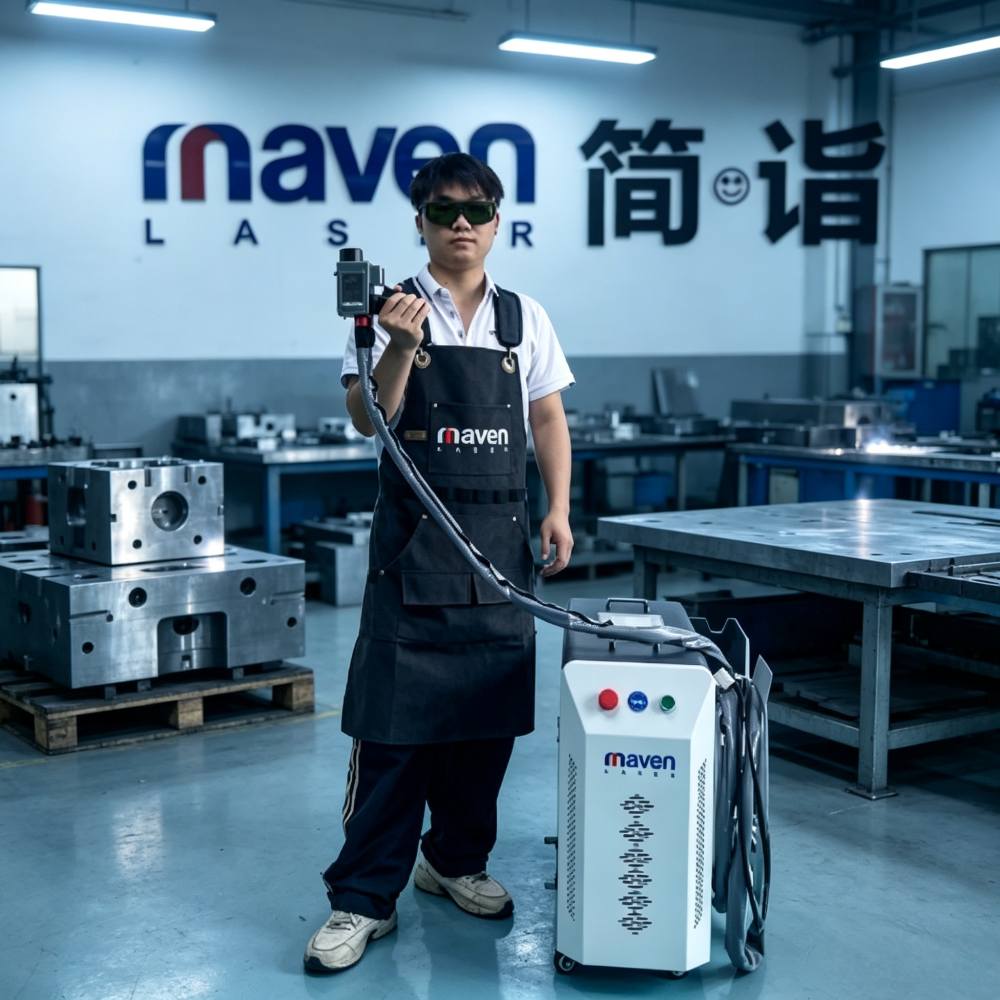
3. Supporting Matching Scheme: Coordinated Application With Laser Precision Spot Welder
In the actual project landing of Shenzhen Jianyi Automation, we often provide clients with integrated process solutions combining welding and cleaning. After the laser precision spot welder completes spot welding of precision hardware, battery tabs and stainless steel fittings, the laser cleaning machine can quickly remove welding smoke marks and oxide layers around welding spots on the same production line.
We will adjust laser power, scanning width and processing speed in a targeted way according to the material thickness, welding process and cleaning standard of client products. For small-batch trial production clients, we support on-site process test to verify parameters first; for large-scale production clients, we can realize linkage setting of welding and cleaning parameters, reduce repeated debugging work for on-site operators, which is also a differentiated service advantage formed by our years of deep cultivation in the automation equipment industry.
4. Key Points for Enterprises to Select Laser Cleaning Equipment
Many factory owners easily fall into the misunderstanding of only pursuing high power when purchasing equipment. In fact, we need to match parameters according to workpiece material, daily output and matching welding equipment models. If the factory is mainly engaged in precision welding processing and needs to clean welding spots in small areas, medium-power portable laser cleaning equipment can fully meet the demand, which can effectively control the initial investment cost.
Meanwhile, after-sales technical service is very critical. Equipment parameter debugging, daily maintenance training and process optimization adjustment all need professional technical support. As an automation equipment manufacturer integrating R&D, production and after-sales, we can provide clients with one-stop services including process testing, installation and commissioning, operator training and long-term remote technical assistance, avoiding the trouble that equipment cannot give full play to its performance due to lack of technical guidance after purchase.

Que pensez-vous de cette publication? Partagez votre avis dans les commentaires.