Daily maintenance items for laser cleaning machine

Daily maintenance is the core link of cost management for the entire lifecycle of laser cleaning machines. Standardized and continuous maintenance operations can not only effectively extend the service life of key components and avoid expensive repair expenses caused by sudden failures, but also ensure that the cleaning accuracy remains stable within the factory standards. This chapter will systematically sort out maintenance points from four dimensions - optical system, cooling cycle system, mechanical transmission system, and laser generator body, and explain the typical maintenance costs and recommended cycles of each module one by one.
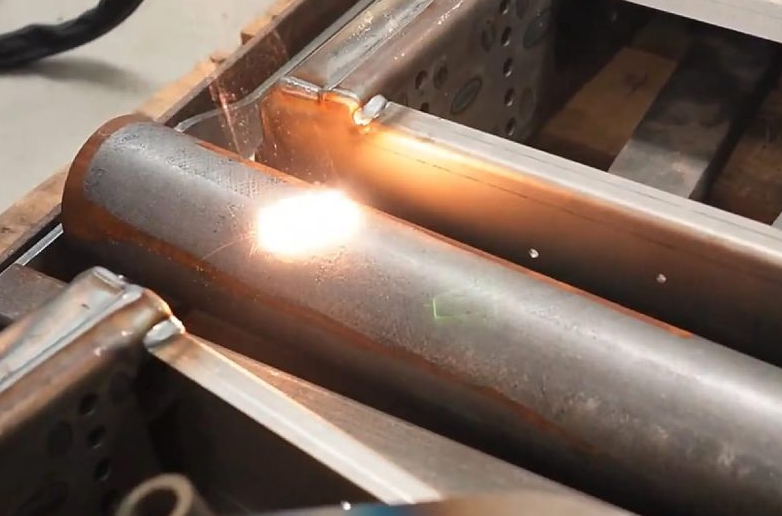
Optical Component Maintenance
Protective Windows
The protective window, positioned at the bottom of the cutting head between the focusing optic and the workpiece, is the optical component most directly exposed to the fumes, spatter, and vaporized contaminant generated during laser cleaning. Even with an effective coaxial or cross-flow assist gas, some contamination reaches and deposits on the protective window surface during every cleaning cycle. As the window accumulates contamination, it absorbs an increasing fraction of the transmitted laser energy — heating up, potentially cracking under thermal stress, and reducing the effective laser power reaching the workpiece. A degraded protective window directly reduces cleaning speed and quality, and if allowed to fail catastrophically, can deposit debris onto the focusing lens above it, causing collateral optical damage that is significantly more expensive to repair.
Protective windows should be inspected at the beginning of every shift and cleaned or replaced whenever visible contamination is detected. The cost of a replacement protective window is modest — typically in the range of $20 to $80 per unit, depending on the machine model — but the replacement frequency can be high in demanding production environments where fume levels are elevated. Budgeting for protective window replacement as a routine consumable, rather than treating it as an unexpected expense, is an essential element of operating cost planning.
Focusing Lenses and Scan Mirrors
The focusing lens and scan mirrors are protected by the window and therefore experience contamination at a much lower rate, but they are not immune to degradation. Thermal cycling — the repeated heating and cooling that accompanies each production session — gradually stresses the optical coatings, and any protective window failure that allows contaminated debris to reach these components can cause damage that requires their replacement. Focusing lenses typically need replacement every one to three years in continuous production use, at a cost ranging from $150 to $600, depending on the optical specification and machine model. Scan mirror replacement is less frequent but more expensive when required, as the galvanometer-mounted mirror assemblies in the scan head are precision components whose misalignment directly affects cleaning pattern geometry and uniformity.
Cooling System Maintenance
Air-Cooled Systems
Air-cooled laser cleaning machines — typically those with laser generator outputs up to approximately 1,500 W — require the simplest cooling system maintenance. The primary maintenance task is periodic cleaning of the fan filter pads and heatsink fins to prevent dust and debris accumulation from restricting airflow. In clean production environments, filter cleaning every one to four weeks is typical; in dusty facilities, weekly or even more frequent cleaning may be necessary. Neglecting this task allows component temperatures to rise gradually, reducing laser generator efficiency, accelerating thermal degradation of electronic components, and potentially triggering thermal protection shutdowns that interrupt production. The cost of this maintenance is minimal — filter pads are inexpensive and the time required is measured in minutes — but the discipline of performing it consistently delivers disproportionate returns in equipment reliability.
Water-Cooled and Chiller Systems
Higher-power laser cleaning machines — those above approximately 1,500 W — require liquid cooling, either through a simple water circuit with a radiator-based heat exchanger or through a dedicated industrial chiller that maintains a precisely controlled coolant temperature. Water-cooled systems require monthly monitoring of coolant electrical conductivity and pH, with action taken when conductivity rises above the manufacturer’s specified maximum — typically 50 to 200 µS/cm. Complete coolant drain-and-refill is recommended every six to twelve months to prevent biological growth and the accumulation of corrosion products that increase thermal resistance within the laser generator’s internal passages. Deionizing filter cartridges, which maintain coolant purity by removing dissolved ions, must be replaced when their capacity is exhausted; the cost per cartridge is typically $30 to $80, and replacement frequency depends on the initial water quality and volume of the circuit.
Chiller-cooled systems add the maintenance requirements of the refrigerant circuit: annual condenser coil cleaning to maintain heat rejection capacity, periodic refrigerant charge verification, and compressor service at the intervals specified by the chiller manufacturer. In many jurisdictions, refrigerant handling requires certified technicians, adding a credential and labor cost dimension that should be budgeted accordingly.
Mechanical and Structural Maintenance
Motion Systems and Cables
In portable and automated laser cleaning systems, the mechanical motion components — linear guides, drive screws, articulated robot joints, cable carriers, and drag chains — require periodic lubrication and inspection to maintain positioning accuracy and prevent premature wear. The fiber optic cable connecting the laser generator to the scan head is particularly important: excessive bending, kinking, or abrasion can cause fiber damage that degrades beam quality and, in severe cases, requires expensive fiber replacement. Cable management — ensuring that cables follow their designed routing paths and are not subjected to bend radii tighter than specified — is a maintenance discipline with a large return on investment relative to its cost.
Housing, Seals, and Connectors
The machine’s external housing, panel seals, and electrical and gas connectors should be inspected periodically for physical damage, corrosion, and seal integrity. Damaged seals allow contaminated air to enter the machine enclosure, accelerating the fouling of internal optical and electronic components. Corroded or loose electrical connectors introduce resistance that can cause overheating and intermittent faults. These inspections are low-cost in time and materials but valuable in preventing the secondary damage that results from allowing minor deterioration to progress unaddressed.
Laser Generator Maintenance
Pump Diode Lifespan and Replacement
In fiber laser generators — the dominant technology in modern laser cleaning machines — the pump diodes that excite the gain fiber are the most critical and expensive life-limited components. Pump diodes in high-quality fiber laser generators are typically rated for 100,000 hours of operation under specified conditions, but their actual service life depends significantly on operating temperature, drive current, and duty cycle. When pump diodes approach the end of their service life, laser generator output power begins to decline, cleaning performance deteriorates, and eventually the machine can no longer achieve the specified cleaning speed or depth. Pump diode replacement — performed either as a scheduled preventive measure at or before the rated hour threshold, or reactively after failure — is a significant cost event. Depending on the laser generator power level and the number of diode modules involved, pump diode replacement can cost anywhere from $2,000 to $15,000 or more. Planning for this cost in long-term budgets, rather than being caught by surprise, is an important element of total cost of ownership management.
Fiber and Resonator Checks
Beyond pump diodes, the gain fiber, resonator mirrors, and beam path components of the laser generator require periodic inspection to verify that beam quality, output power, and mode stability remain within specification. These checks are typically performed by the manufacturer’s service engineers during scheduled preventive maintenance visits, which may be annual or biennial depending on the laser generator’s operating hours and the manufacturer’s recommended service interval. The cost of a preventive maintenance service visit — covering inspection, cleaning, and minor adjustments — typically ranges from $500 to $2,000 depending on travel, the scope of work, and whether parts replacement is required.
Routine maintenance costs for a laser cleaning machine encompass optical component inspection and replacement, cooling system fluid management and filter replacement, mechanical system lubrication and cable inspection, and laser generator preventive service. In aggregate, these costs typically range from $1,500 to $6,000 per year for mid-range systems in continuous production use, varying with power level, duty cycle, and the cleanliness of the production environment. Consistent execution of the preventive maintenance program is the single most cost-effective investment available to the laser cleaning machine operator.

¿Qué opinas de esta publicación? Comparte tu opinión en los comentarios.