Solution to excessive welding pool temperature in welding robots

With advantages such as high precision, high efficiency, and stability, welding robots have been widely used in automated production in various industries. They can not only ensure consistency in welding quality, but also significantly improve production efficiency and achieve all-weather continuous operation. However, as the equipment runs for a long time, the heat generated during the welding process will continue to accumulate, leading to a gradual increase in the temperature of the molten pool. When the temperature of the molten pool exceeds a reasonable range, it not only affects the formation and quality of the weld seam, but may also accelerate the wear of equipment components and reduce the stability of system operation. Therefore, timely identification and resolution of the problem of high melt pool temperature is crucial for ensuring welding effectiveness and extending equipment service life.
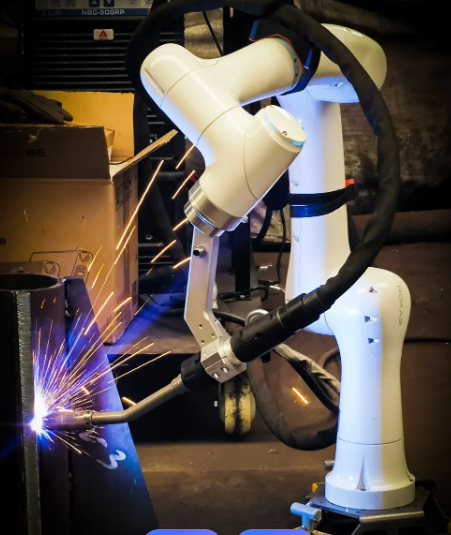
Addressing excessive weld pool temperatures in robotic welding requires careful consideration of several factors, including the electrode angle, arc duration, electrode diameter, and welding technique.
1. Electrode Angle
When the angle between the electrode and the direction of welding falls within a moderate range, the arc becomes concentrated, resulting in a high weld pool temperature; conversely, if the angle is too acute, the arc disperses, leading to a lower weld pool temperature. When selecting the electrode angle, it is essential to base the choice on the specific welding process being employed, as this contributes to stabilizing weld quality.
2. Arc Duration
To regulate the weld pool temperature, an intermittent arc technique (or "arc-breaking" method) may be utilized during welding. Specifically during root pass welding (sealing the bottom of the joint), both the frequency of arc interruption and the duration of the active arc directly influence the weld pool temperature. If the weld pool temperature becomes excessively high—resulting in an overly large melt-through hole—the arc duration can be shortened to lower the temperature. This approach helps maintain a smaller melt-through hole and ensures a moderate bead height on the inside of the pipe, thereby preventing excessive internal weld protrusion or the formation of weld lumps (blobs).
3. Electrode Diameter
Welding Current and Electrode Diameter: The welding current and electrode diameter should be selected based on the spatial position of the weld joint and the welding orientation. At the commencement of welding, a larger welding current and electrode diameter are typically appropriate; however, for vertical or overhead welding positions, a lower current and smaller electrode diameter are generally required. The foundation for achieving a well-formed weld lies in the judicious selection of the welding current and electrode diameter, as this facilitates effective control over the weld pool temperature.
4. Selection of Appropriate Welding Parameters
Welding parameters primarily encompass the welding current, voltage, torch position and orientation, wire feed speed, and similar variables. The welding current and voltage should be adjusted as necessary to ensure optimal weld quality. To prevent the weld pool temperature from escalating due to prolonged operation at high currents, the operator can make appropriate adjustments to the welding parameters based on the quality of the resulting weld bead.
The above points outline how welding robots can be managed to control weld pool temperatures. Maintaining an appropriate weld pool temperature is crucial for preserving weld quality and enhancing the user's overall production efficiency.

Was halten Sie von diesem Beitrag? Teilen Sie Ihre Gedanken in den Kommentaren.