Laser Welding Process: Factors Affecting Laser Welding Strength

The strength of laser welded joints is influenced by various factors, such as material properties, laser parameters, joint design, and welding environment. In order to achieve high-quality welding, it is necessary to have a deep understanding of the specific roles and interrelationships of each factor, so as to optimize each link in practical operation. The following will provide a detailed analysis of these key factors.
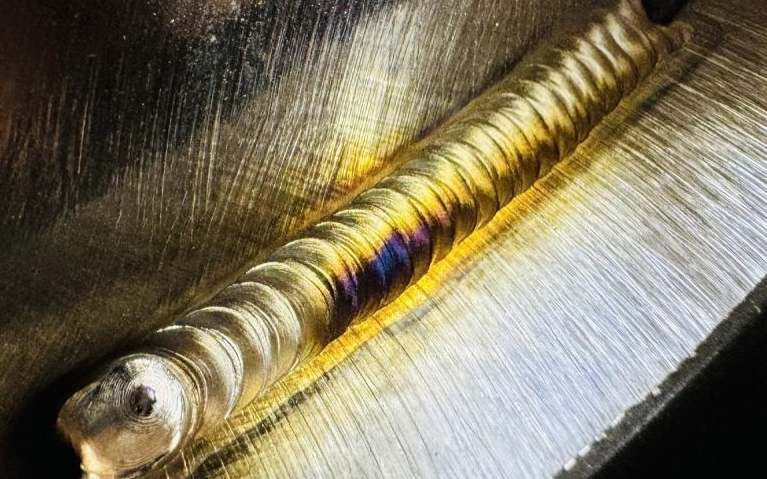
Material Properties
Material properties are an important basis for determining welding results, which are mainly manifested in base material composition, material thickness, and surface condition.
Substrate composition: Different materials have different absorption rates for lasers. For example, highly reflective metals (such as aluminum and copper) have low absorption rates for laser energy, which can easily lead to insufficient penetration. It is necessary to improve the welding effect by adjusting laser parameters or coating the surface with absorbing materials.
Material thickness: Material thickness directly affects the energy distribution of the laser. Too thick materials may cause insufficient laser penetration, resulting in incomplete penetration welds; while too thin materials are prone to burn through due to excessive laser energy, requiring careful adjustment in parameter settings.
Surface condition: The cleanliness, oxide film, and roughness of the material surface will affect the transmission and absorption of the laser. Surface contamination or oxidation may lead to uneven molten pool formation and reduce weld strength. Therefore, pre-welding cleaning and proper surface treatment are essential.
Laser Parameters
Laser parameters directly determine the heat input and molten pool formation during welding.
Laser power: Too low power may lead to insufficient penetration and weakened weld strength, while too high power may easily cause material burn-through or form an excessively large molten pool, thereby weakening the strength of the weld joint. Therefore, it is necessary to select the appropriate power level according to the material properties and thickness.
Welding speed: Too fast welding speed may lead to insufficient molten pool formation, and pores or cracks may appear in the weld; while too slow speed may cause excessive heat input, causing overheating or even deformation of the material.
Focus position: Accurate positioning of the laser focus helps to maximize the effective use of energy and ensure the depth and uniformity of the molten pool. Focus deviation will lead to reduced welding efficiency and may cause quality defects.
Pulse parameters: For pulsed laser welding, the setting of pulse width and frequency directly affects the formation and solidification process of the molten pool. Optimizing pulse parameters can reduce the generation of cracks and pores and improve welding strength.
Connector Design
The joint design not only affects the ease of welding but is also directly related to the mechanical properties and reliability of the weld.
Joint configuration: Different types of joints (such as butt joints, lap joints) are suitable for different structural requirements and mechanical performance requirements. For example, butt joints are suitable for high-strength welding, while lap joints are better suited for thin plate welding.
Assembly and Alignment: Poor joint assembly or alignment errors can cause weld pool migration or weld defects, reducing weld strength. In actual operations, the use of precision fixtures or automatic alignment systems can significantly improve assembly accuracy.
Edge preparation: The quality of edge preparation is critical to the welding effect. Uneven or burred edges may cause cracks or inclusion defects, so precision machining equipment is required to handle the edges.
Welding Environment
The welding environment is an external factor that affects the welding quality, including the selection of shielding gas and the control of environmental conditions.
Shielding gas: The right type and flow of shielding gas can prevent oxidation of the molten pool and improve the compactness and corrosion resistance of the welded joint. For example, argon and helium are commonly used shielding gases, and too much or too little flow will affect the protection effect.
Environmental conditions: An environment with high humidity, too much dust, or a sharp temperature difference may have an adverse effect on the welding process and even cause the performance of the weld to deteriorate. Therefore, maintaining good environmental control in the welding area is an important measure to ensure welding quality.
The factors that affect the strength of laser welded joints are complex and diverse, involving all aspects of material properties, laser parameters, joint design, and welding environment. In practical applications, these factors need to be considered comprehensively, and high-quality, high-strength welded joints can be achieved through reasonable process optimization and equipment adjustment.

Was halten Sie von diesem Beitrag? Teilen Sie Ihre Gedanken in den Kommentaren.